MY ROLE
As the leader of a team in a small but nimble Innovation Lab, my role was spread across the project lifecycle. I managed the initial insight research, assembled a diverse cross-functional project team and managed the strategy, design and agile development of this project’s concept.
The Problem
In recent years, the United States has seen student loan debt surpass credit card debt as the top form of debt among Americans behind mortgage loans. Our team was tasked with identifying the core issue at hand and addressing it to help the government manage the impeding student loan default crisis.
ECMC struggled to engage the group of student loan borrowers who have the highest risk of defaulting on their student loans. We were tasked with not only engaging them, but creating a tool to help them succeed at life beyond student loans…no big deal, right?
DISCOVERY
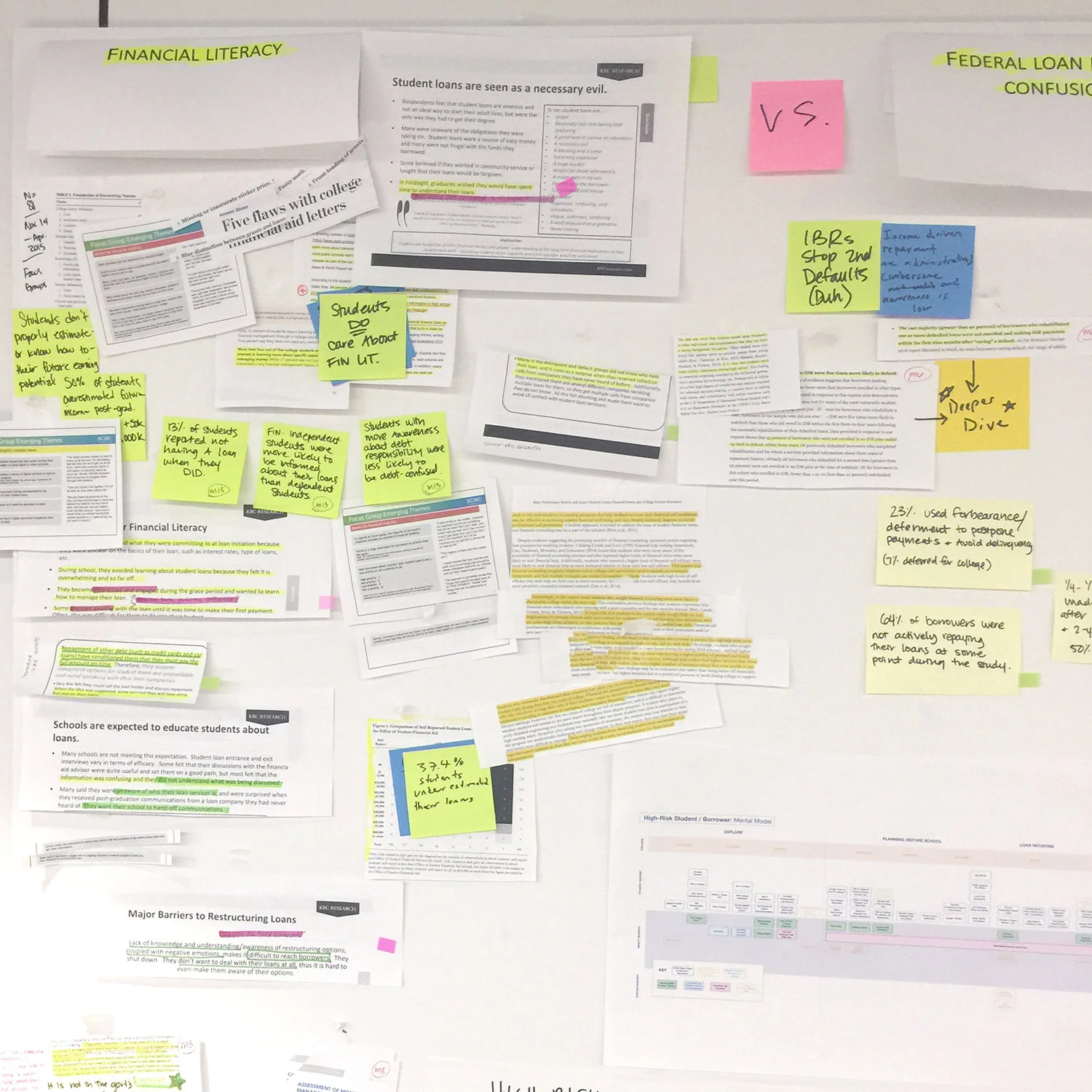
Since the team was tasked with a fairly large, vague goal, it felt natural to kick the project off with a discovery phase. This phase of work began with an audit of the secondary research landscape. In the world of student loans, there is no shortage of research and data. Once the working team had a sufficient understanding of the landscape and possible problems that, if solved, could have significant impact, we were able to focus our research.
Armed with insights from the in-depth secondary research findings, we planned a series of six focus groups to understand the root of the repayment problem. The team recruited participants based on the undeniable insight that the group of users at the biggest risk of having repayment struggles were those that had started - but had not completed a degree and had student loan debt.
The focus groups were conducted over the span of three days, analyzed and presented back to the company’s leadership team for approval on next steps.
The Opportunity
What we found in our discovery phase was that students who had borrowed money for college but had not attained a degree put less priority on repayment than those who had completed a degree. These “high-risk” borrowers prioritized life experiences (along with bills and all the other life expenses) above the repayment of their student loans. They perceived student loan repayment as something far off in the future that had little-to-no impact on their lives today.
Through this insight, we defined an opportunity to help educate these borrowers as well as incentivize them to engage with their student loan and reward them with good financial behavior.
The Strategy
Understanding the User’s Mindset
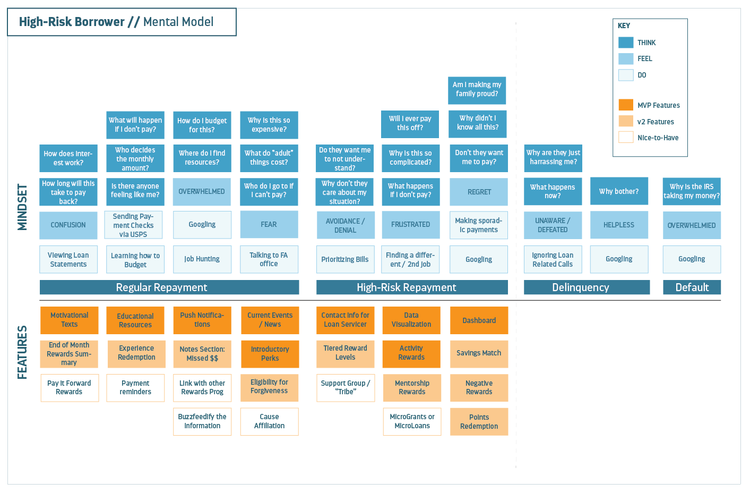
With the plethora of information we had gathered about these high-risk borrowers, we were able to document detailed mental models in regards to their thought process when considering student loan repayment.
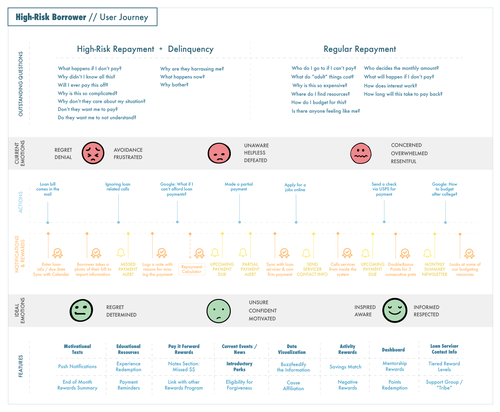
That process naturally led into the creation of a user Journey Map that would serve as the foundation for initial product strategy and design for the Borrower Rewards App.
The Solution: A REWARDS APP FOR HIGH-RISK STUDENT LOAN BORROWERS
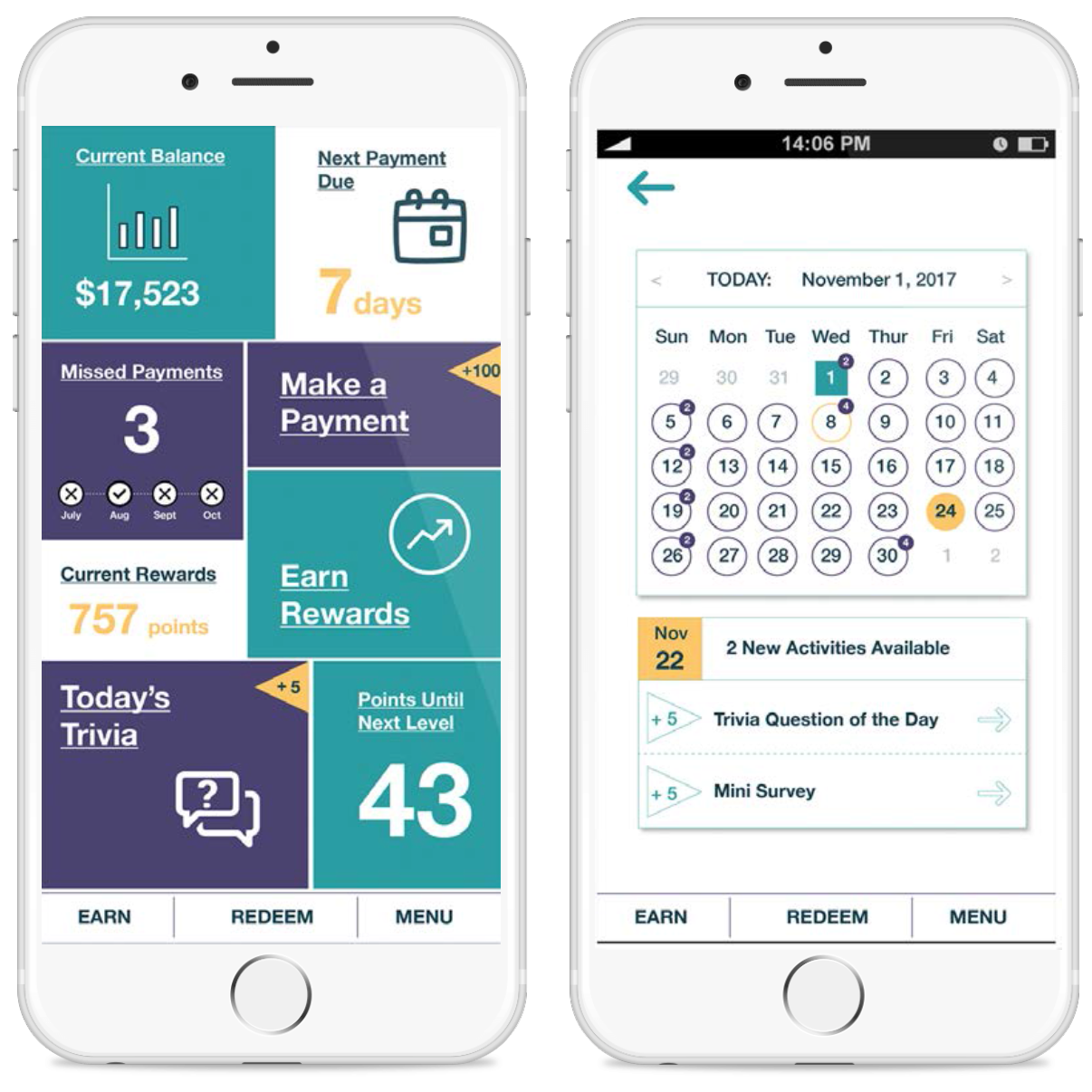
While the team began exploring solutions that were medium-independent, we tested multiple concepts with users and found that a mobile app was likely our strongest road to success with this particular audience. Through iterative sketching and design architecture, the detailed concept for the Borrower Rewards App was born. The team defined the architecture and program logistics, and conceptualized a look and feel for the app for the purposes of pitching the concept to executive leadership.
Project Status
This project was in-review for build funding when the strategic direction of the company changed and the Innovation team was dissolved.
Proprietary material of ECMC Group. Used with permission. No further use authorized.