MY ROLE
I was brought on to this project team as a consultant partner with a local Minneapolis digital agency. The team consisted of myself as the UX strategy lead, an account representative, project manager, development lead and visual designer. Our project team partnered closely with the client team in the evolution of this project.
introduction
A local ammunition company was experiencing workflow challenges and inaccuracies in their production and publishing process internally. They brought our agency on to pinpoint where the process pain points were as well as to create a solution to help ease these pains.
DISCOVERY: The problem
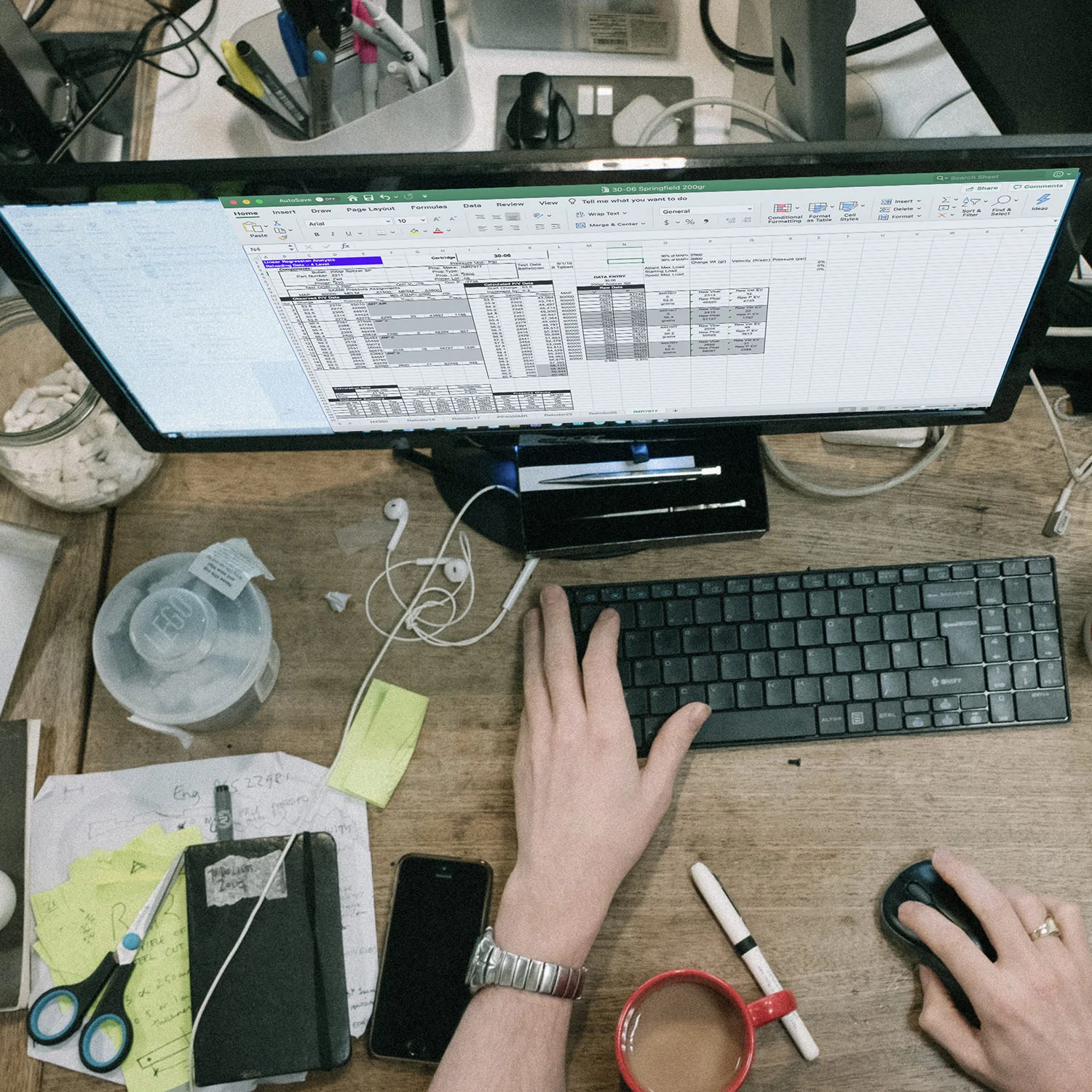
We kicked the project off with a lite version of an ethnography study. I had the opportunity to job-shadow the client’s two Lead Ballisticians for two days. I was able to understand and document their processes across mediums (think spreadsheet to post-it to reference book and back again). What I heard from the Ballisticians was that they struggled to keep the most up-to-date recommended ammunition load information posted to the wall above their workstations. They also struggled to keep their calculations from each test round organized (their primary recording tool for this data was Post-Its).
I also had the opportunity to talk with a Project Manager at the company. He voiced that approvals for each project were communicated by passing a “final” spreadsheet back-and-forth via email. This was known to cause versioning issues and inherently, accuracy problems.
The Opportunity
As observed during discovery, it was obvious to both our team and the client’s teams that there were some gaps in the overall testing and approval process. We knew right away that we could (fairly easily) eliminate human error and streamline the process by creating an online platform for employees to share data in real-time.
The Strategy
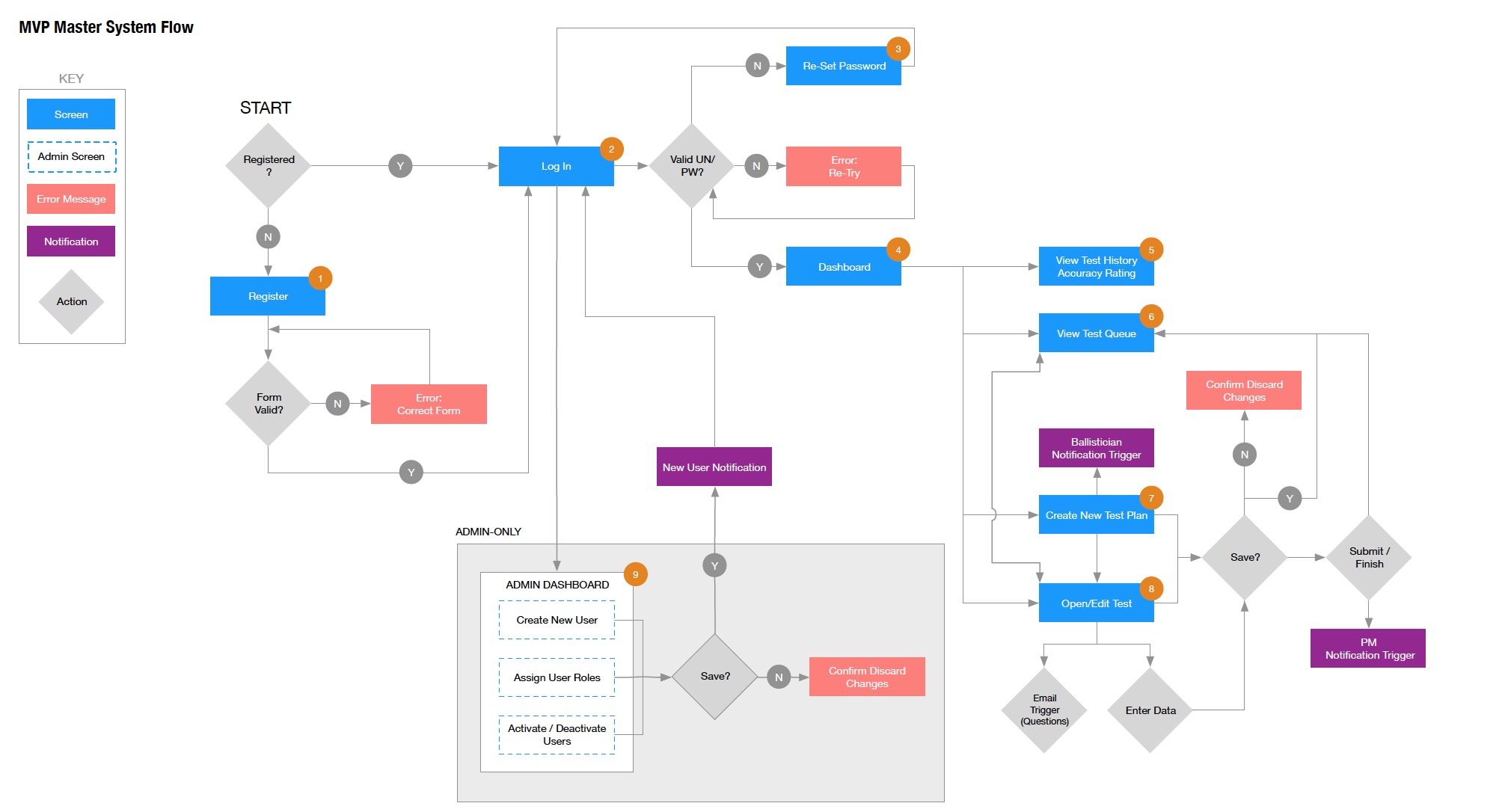
Documenting the Old and New Process
Our first step was to document both the existing process as well as a new proposed process for the online system. Doing so allowed all parties involved in the progression of the project to begin at ground zero and move to the same page.
Requirements Deconstruction
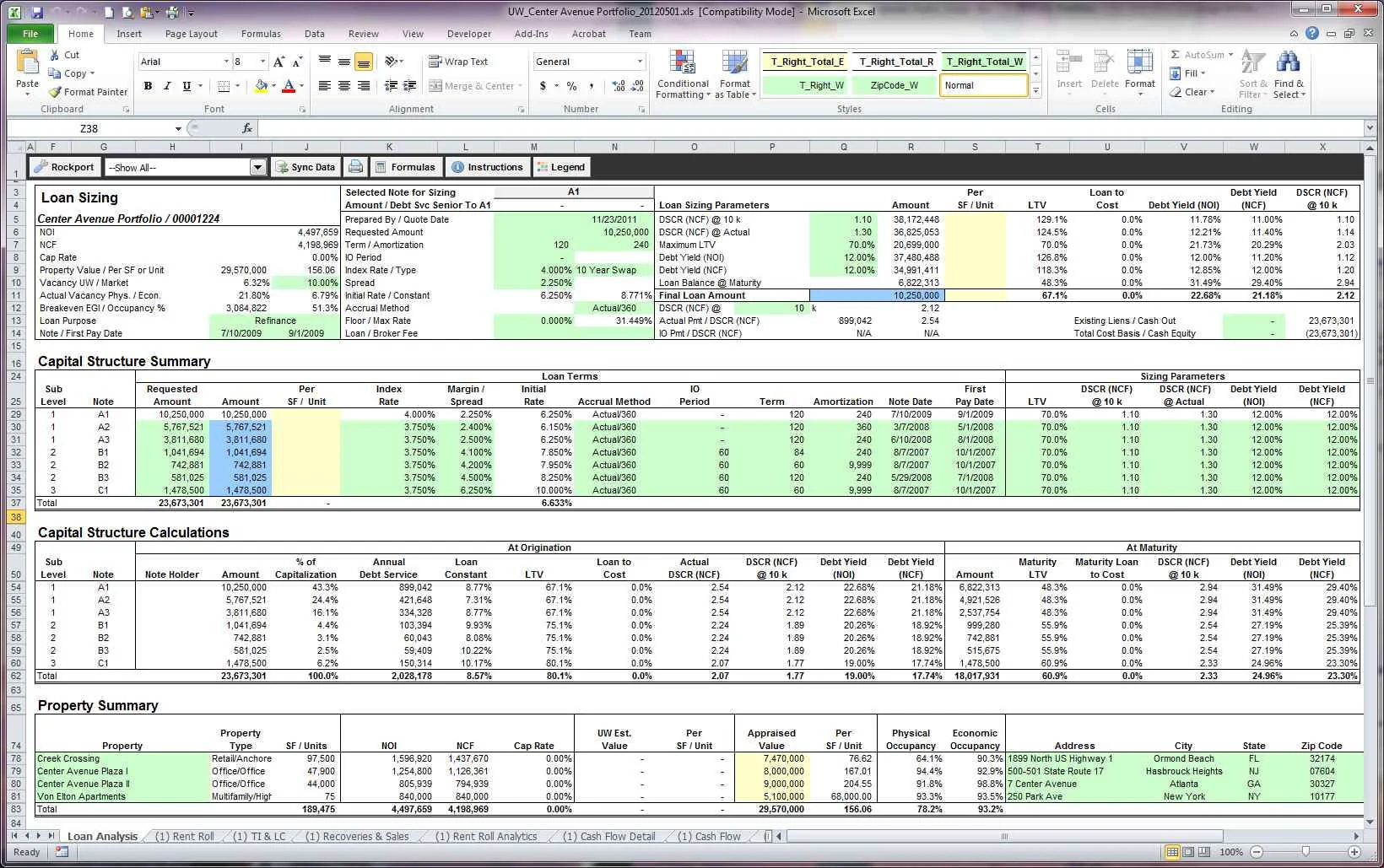
Due to the complex nature of the content for this project, we decided to begin by pulling together MVP requirements. These requirements would evolve over time, but we began by gathering all documentation the client’s team used throughout their process. This consisted of multiple complex calculating spreadsheets that we needed to break into digestible requirements for our agile development team (anybody remember how to calculate a standard deviation? Anyone? Bueller?)!
Iterate and Repeat
Once minimum requirements were created, the team took an iterative approach to architecture and design. This allowed our team to collaborate VERY closely with the client’s team and identify any misunderstandings nearly immediately which minimized re-work and kept the ship pointed North.
The Solution: A desktop application to track ballistician workflows
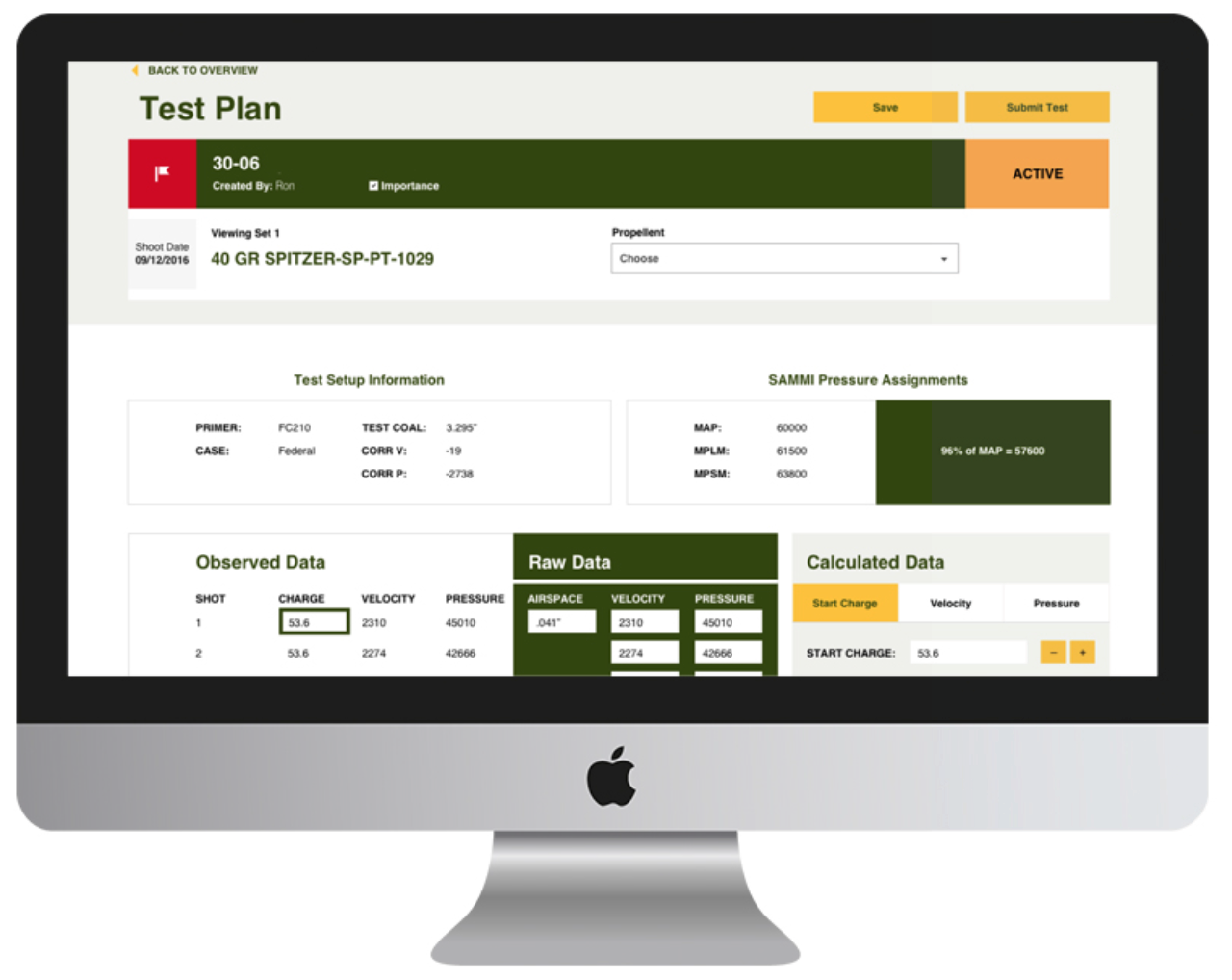
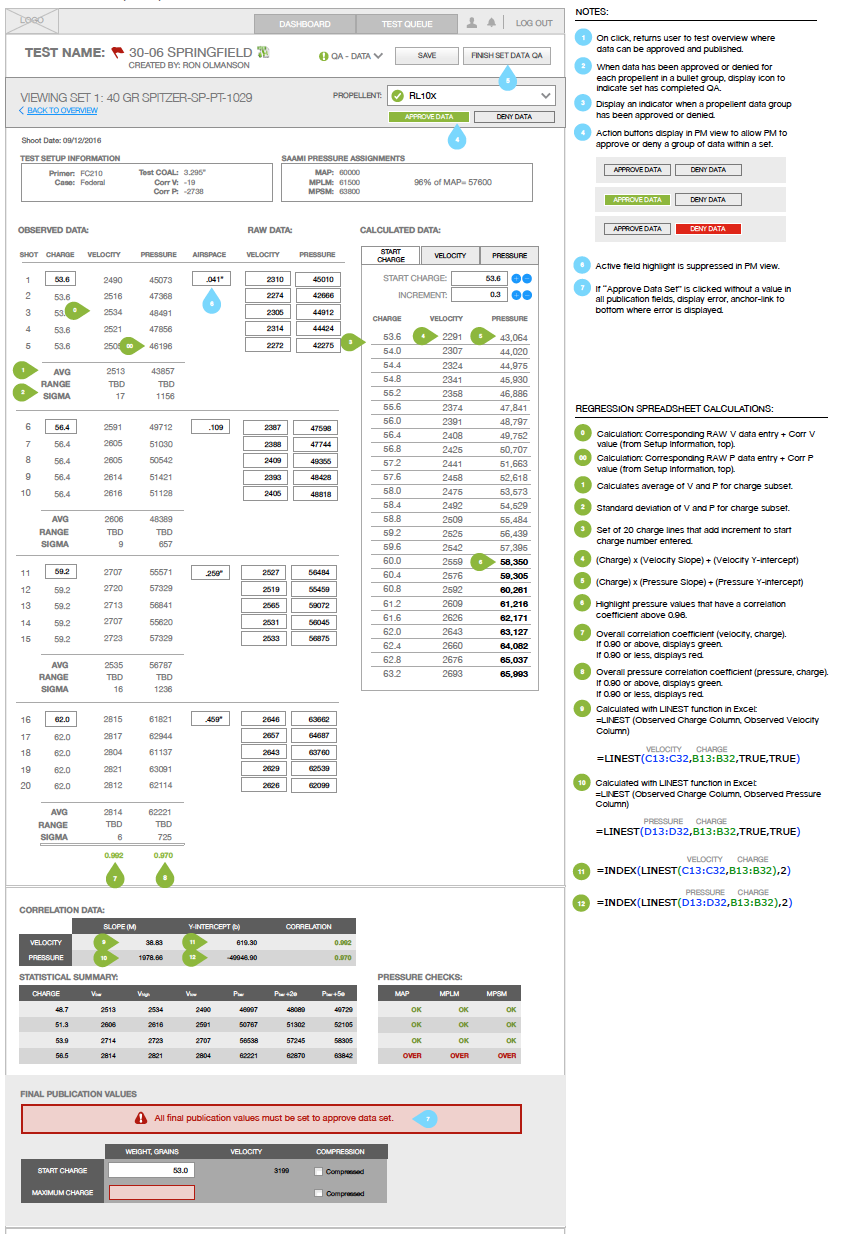
The resulting software was a complex data-collection tool for the client teams. The application was able to take over the heavy-lifting of the Excel spreadsheets the team was using previously. The web-app allowed Project Managers to create and assign test plans and also allowed Ballisticians to execute tests, communicate results and receive approvals on data that would eventually be published in the company’s annual ammunition re-loading instruction book.
Project Status
I consulted on this project for the initial discovery and design phases. While I was not able to see the progression of this project, I have been told an MVP has been implemented and they are taking an iterative approach to evolve the application.